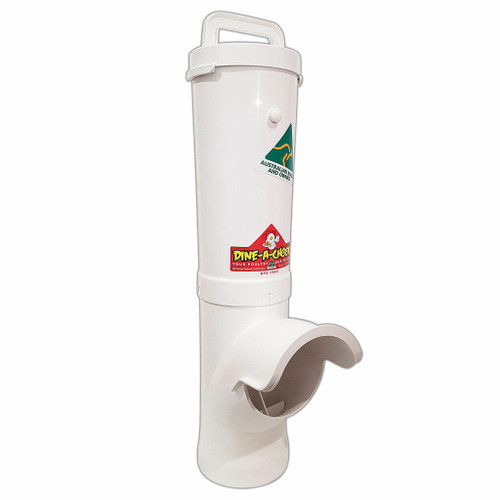
Chicken Feeders
Dine-A-Chook chicken feeders are designed to keep feed dry, off the ground and away from the pests that spilled grain attracts. We built the first one in 2009 for our own backyard flock, and the same waste-reducing design now feeds flocks across New Zealand, Australia and the UK. Every feeder is Australian made from UV-stabilised ASA, ships free to any New Zealand address, and comes with the brackets and screws to mount it.
This page covers our full range of chicken feeders for New Zealand: the Small Feeder (3.5L) and the Large Feeder (4.7L), in white, red and red-base versions.
Which chicken feeder do I need?
Both sizes use the same design. The difference is capacity and mounting height.
- Small Chicken Feeder 3.5L: 541mm high, holds about 2.6kg of feed. Suits lower coops, chicken tractors and compact runs, and works well for chicks from around 5 weeks of age.
- Large Chicken Feeder 4.7L: 710mm high, holds about 3.7kg of feed. If your coop has the height clearance, this is usually the better-value choice because it needs refilling less often.
As a guide, one feeder comfortably serves up to 8 hens. For bigger flocks, two or more feeders spaced apart work better than one large feeder: less crowding at the feeding bay, and quieter birds get their share. Prefer a red feeder? The Large Red Feeder, Large Red Base Feeder and Small Red Base Feeder are the same feeder in a different colour. Setting up two coops or a bigger flock? The Small Feeder Twin Pack gives you two in one order.
Setting up a new coop from scratch? Our feeder and drinker kits pair a feeder with a matching Dine-A-Chook drinker.
How a Dine-A-Chook feeder cuts feed waste
Chickens do not eat neatly. They rake feed sideways with their beaks, drag it forward and pick out favourites, scattering the rest. Any feed near an open edge ends up on the ground, where it gets wet, goes mouldy, and feeds the sparrows, rats and mice instead of your hens. Open troughs and hanging feeders were designed for how we think chickens eat, not how they behave.
A Dine-A-Chook feeder works with that behaviour instead of against it:
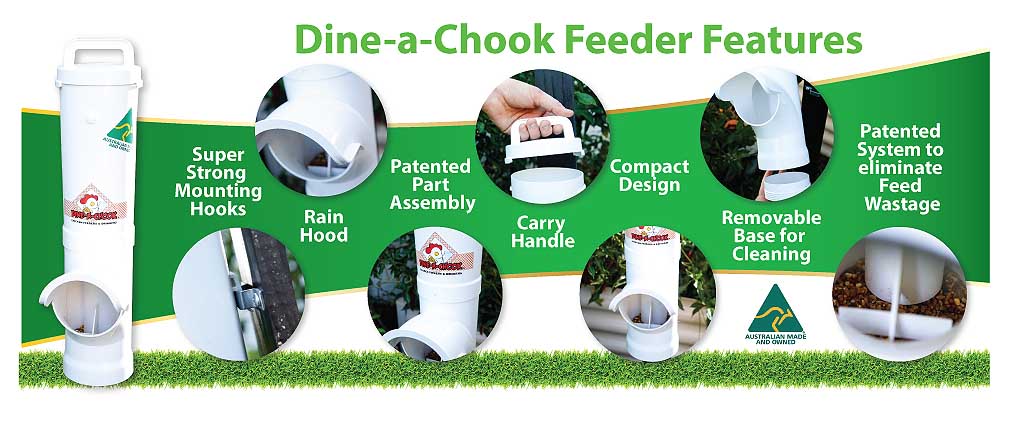
- Recessed feeding bay: hens put their head inside to eat, so raked feed stays in the feeder
- Vertical divider and horizontal paddles: limit side-to-side raking and forward flicking
- Angled rain hood: sheds rain away from the opening, which matters through a wet New Zealand winter
- Wall mounted: it does not swing, tip or get knocked over, and feet stay out of the feed
Most flocks adapt within a day or two. Birds that have only ever been bowl-fed can take a little longer.
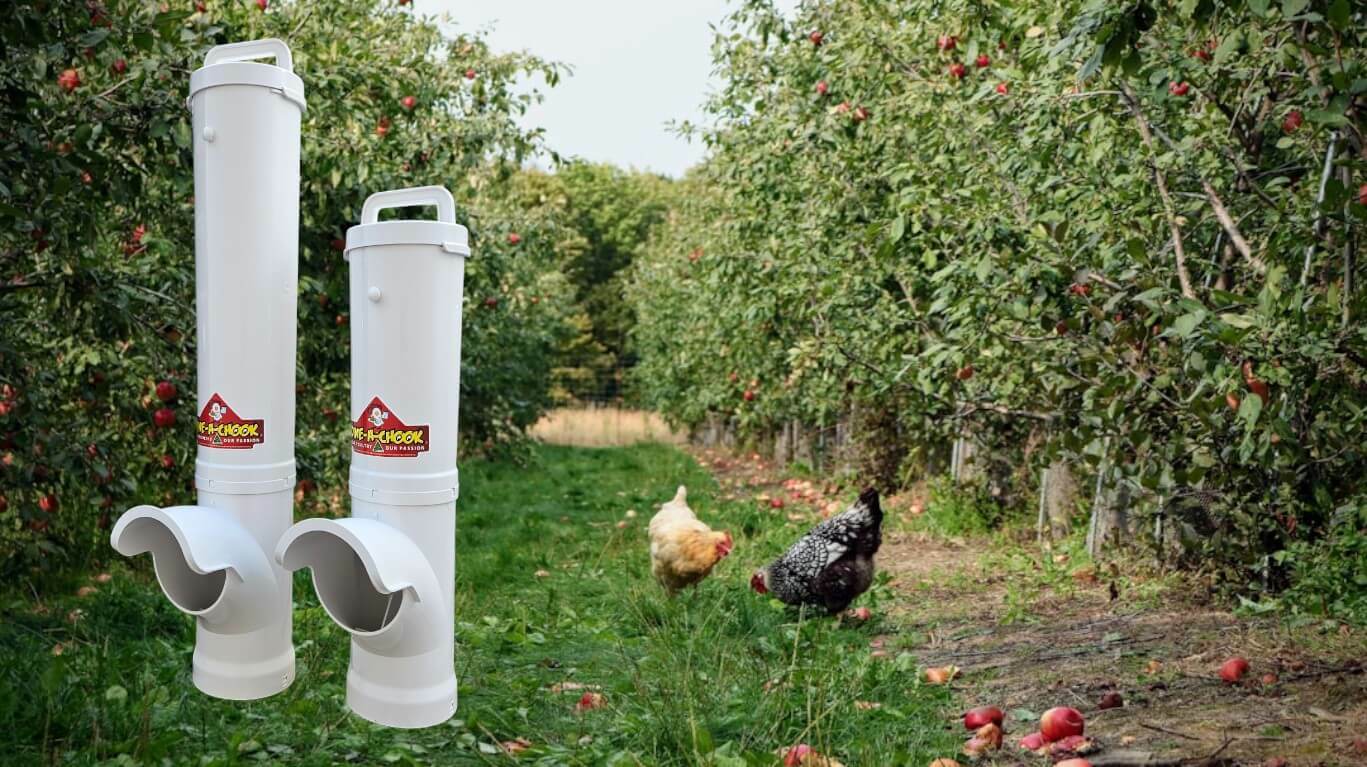
Australian made, built to last outdoors
We injection mould our own components in Brisbane and assemble every feeder by hand. The material is commercial-grade ASA, chosen because it holds up to sun and weather where cheaper plastics fade, crack or yellow.
- UV-stabilised: does not degrade in full sun
- Certified BPA-free: safe for your birds and their feed
- No moving parts: nothing to seize, jam or wear out
- Clicks together: no screws, glue or joins to leak
- Fully opaque: keeps light off the feed so it stays fresh longer
- No metal in contact with feed: nothing to rust
Feed, pests and coop hygiene
Keeping feed in the feeder is the first step in good coop management. Spilled grain is what draws rodents and wild birds into a coop, and it is where mould and droppings contaminate what your hens eat. A feeder that keeps feed contained removes most of that attraction, though it is not a barrier: an established rodent problem still needs baiting or trapping alongside it.
For the least waste, use a pelleted feed or a mash. Grain and scratch mixes invite chickens to hunt for the tasty bits and flick the rest, and they rarely give a laying hen a balanced diet on their own. Do not use molasses-coated or sticky feeds in any feeder.
Installation
Every feeder comes with steel mounting brackets and screws, and takes about five minutes to fit. Mount it vertically on any solid surface: timber, sheet metal or masonry. Set the height so the feeding bay lines up with the back of your hen's neck when she is standing naturally. For wire-mesh coops, ask us about the wire mesh mounting kit.
New owners sometimes worry the feed looks low in the bay. That is by design: if you can put a finger in and move the feed, your chickens can reach it. Keeping feed back from the edge is what stops the flicking.
Frequently asked questions
What size feeder do I need?
For up to 4 hens the Small Feeder (3.5L) is a good starting point. For 6 to 8 hens the Large Feeder (4.7L) is usually the better choice. Low coops, tractors and compact setups are where the Small Feeder makes more sense regardless of flock size.
Will it keep rats and mice out?
It keeps feed contained and dry, which removes most of what attracts rodents, and the recessed bay is far harder to reach than an open tray. It is not a sealed barrier, so if you already have a rodent problem, treat that as well.
What is the difference between the red and white feeders?
Colour only. Same design, same capacity, same material. Pick the one you like the look of.
Where are Dine-A-Chook feeders made?
In Australia. We mould our own parts in Brisbane, Queensland and assemble each feeder by hand, rather than assembling imported components.
Is the material safe?
Yes. Every feeder and drinker is made from commercial-quality ASA, a certified BPA-free material with high UV and heat resistance.
How is shipping handled in New Zealand?
Shipping is free on every order to any New Zealand address. The price you see is the price you pay.
Still not sure which feeder suits your coop? Contact us and we will help you choose.
Dine-A-Chook chicken feeders are designed to keep feed dry, off the ground and away from the pests that spilled grain attracts. We built the first one in 2009 for our own backyard flock, and the same waste-reducing design now feeds flocks across New Zealand, Australia and the UK. Every feeder is Australian made from UV-stabilised ASA, ships free to any New Zealand address, and comes with the brackets and screws to mount it.
This page covers our full range of chicken feeders for New Zealand: the Small Feeder (3.5L) and the Large Feeder (4.7L), in white, red and red-base versions.
Which chicken feeder do I need?
Both sizes use the same design. The difference is capacity and mounting height.
- Small Chicken Feeder 3.5L: 541mm high, holds about 2.6kg of feed. Suits lower coops, chicken tractors and compact runs, and works well for chicks from around 5 weeks of age.
- Large Chicken Feeder 4.7L: 710mm high, holds about 3.7kg of feed. If your coop has the height clearance, this is usually the better-value choice because it needs refilling less often.
As a guide, one feeder comfortably serves up to 8 hens. For bigger flocks, two or more feeders spaced apart work better than one large feeder: less crowding at the feeding bay, and quieter birds get their share. Prefer a red feeder? The Large Red Feeder, Large Red Base Feeder and Small Red Base Feeder are the same feeder in a different colour. Setting up two coops or a bigger flock? The Small Feeder Twin Pack gives you two in one order.
Setting up a new coop from scratch? Our feeder and drinker kits pair a feeder with a matching Dine-A-Chook drinker.
How a Dine-A-Chook feeder cuts feed waste
Chickens do not eat neatly. They rake feed sideways with their beaks, drag it forward and pick out favourites, scattering the rest. Any feed near an open edge ends up on the ground, where it gets wet, goes mouldy, and feeds the sparrows, rats and mice instead of your hens. Open troughs and hanging feeders were designed for how we think chickens eat, not how they behave.
A Dine-A-Chook feeder works with that behaviour instead of against it:
- Recessed feeding bay: hens put their head inside to eat, so raked feed stays in the feeder
- Vertical divider and horizontal paddles: limit side-to-side raking and forward flicking
- Angled rain hood: sheds rain away from the opening, which matters through a wet New Zealand winter
- Wall mounted: it does not swing, tip or get knocked over, and feet stay out of the feed
Most flocks adapt within a day or two. Birds that have only ever been bowl-fed can take a little longer.
Australian made, built to last outdoors
We injection mould our own components in Brisbane and assemble every feeder by hand. The material is commercial-grade ASA, chosen because it holds up to sun and weather where cheaper plastics fade, crack or yellow.
- UV-stabilised: does not degrade in full sun
- Certified BPA-free: safe for your birds and their feed
- No moving parts: nothing to seize, jam or wear out
- Clicks together: no screws, glue or joins to leak
- Fully opaque: keeps light off the feed so it stays fresh longer
- No metal in contact with feed: nothing to rust
Feed, pests and coop hygiene
Keeping feed in the feeder is the first step in good coop management. Spilled grain is what draws rodents and wild birds into a coop, and it is where mould and droppings contaminate what your hens eat. A feeder that keeps feed contained removes most of that attraction, though it is not a barrier: an established rodent problem still needs baiting or trapping alongside it.
For the least waste, use a pelleted feed or a mash. Grain and scratch mixes invite chickens to hunt for the tasty bits and flick the rest, and they rarely give a laying hen a balanced diet on their own. Do not use molasses-coated or sticky feeds in any feeder.
Installation
Every feeder comes with steel mounting brackets and screws, and takes about five minutes to fit. Mount it vertically on any solid surface: timber, sheet metal or masonry. Set the height so the feeding bay lines up with the back of your hen's neck when she is standing naturally. For wire-mesh coops, ask us about the wire mesh mounting kit.
New owners sometimes worry the feed looks low in the bay. That is by design: if you can put a finger in and move the feed, your chickens can reach it. Keeping feed back from the edge is what stops the flicking.
Frequently asked questions
What size feeder do I need?
For up to 4 hens the Small Feeder (3.5L) is a good starting point. For 6 to 8 hens the Large Feeder (4.7L) is usually the better choice. Low coops, tractors and compact setups are where the Small Feeder makes more sense regardless of flock size.
Will it keep rats and mice out?
It keeps feed contained and dry, which removes most of what attracts rodents, and the recessed bay is far harder to reach than an open tray. It is not a sealed barrier, so if you already have a rodent problem, treat that as well.
What is the difference between the red and white feeders?
Colour only. Same design, same capacity, same material. Pick the one you like the look of.
Where are Dine-A-Chook feeders made?
In Australia. We mould our own parts in Brisbane, Queensland and assemble each feeder by hand, rather than assembling imported components.
Is the material safe?
Yes. Every feeder and drinker is made from commercial-quality ASA, a certified BPA-free material with high UV and heat resistance.
How is shipping handled in New Zealand?
Shipping is free on every order to any New Zealand address. The price you see is the price you pay.
Still not sure which feeder suits your coop? Contact us and we will help you choose.